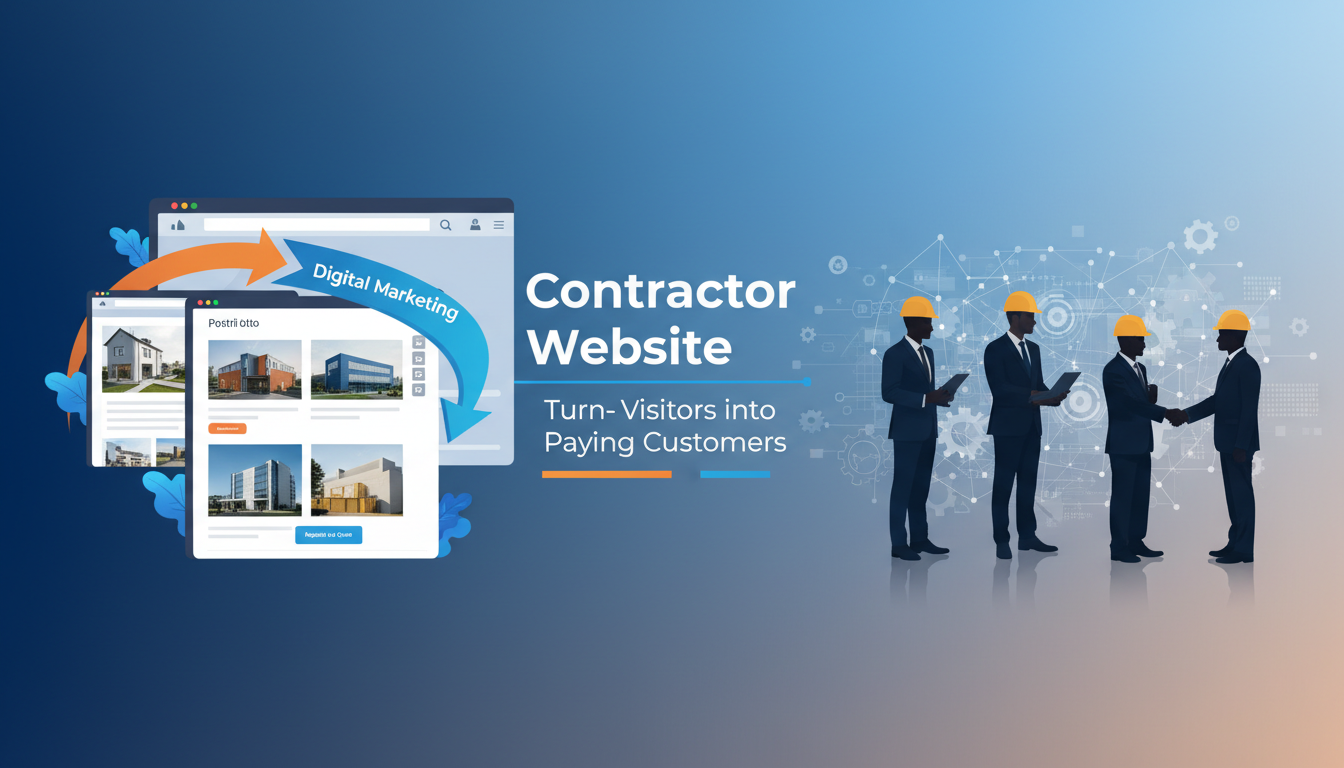
Boost Contractor Sales with Pro Web Design
Marketing, Contractor Website, Professional Web Design
How a Professional Website Helps Contractors Turn Visitors Into Paying Customers
For contractors, a website is no longer an online brochure—it is the primary sales engine. Agencies and businesses that serve this niche know that the right contractor website can consistently turn visitors into customers, fill project pipelines, and differentiate local service providers in crowded markets.
Why a Professional Website Is the New Front Door for Contractors
For agencies, this is a major opportunity. By pairing professional web design with clear customer conversion strategies, you can transform a basic contractor website into a predictable lead-generation system that supports broader digital marketing for contractors—from SEO and local search to paid campaigns and email nurturing.
Designing for Trust: The Foundation of Conversion
Most contractor decisions are high stakes for the customer: roofs, kitchens, foundations, HVAC, or commercial build-outs. Before price, they are buying trust. A professional website must therefore be designed to answer one question quickly: “Can I trust this contractor with my project?”
Clean, modern layout: Simple navigation, consistent branding, and uncluttered pages make it easy for visitors to explore services without friction.
Professional photography: Real project photos, crews at work, and before-and-after galleries show capability better than any tagline.
Social proof: Reviews, testimonials, certifications, and partner logos reduce perceived risk and nudge visitors toward contact.
Agencies that specialize in professional web design for contractors know that these elements are not just “nice to have”—they are the first step in any strategy to turn visitors into customers.
Structuring Pages Around Clear Customer Journeys
A high-performing contractor website is intentionally structured around how prospects make decisions. Instead of random pages and generic copy, each section supports a specific stage of the buying journey: awareness, evaluation, and action.
Service pages that educate: Clear explanations of services, process breakdowns, timelines, and FAQs help visitors understand what to expect and reduce objections before they ever call.
Project galleries and case studies: Organized by project type or industry, these pages show real outcomes and make it easy for visitors to see themselves as the next success story.
Conversion-focused contact paths: Quote forms, “request a site visit” buttons, and click-to-call options on mobile ensure there is always a next step visible on the page.
Strategic page layouts guide visitors from curiosity to confident project inquiries.
Turning Traffic Into Leads With Smart Conversion Strategies
Traffic alone does not grow a contracting business. Agencies must combine digital marketing for contractors with on-site customer conversion strategies that capture and qualify leads. The goal: ensure that every relevant visit has a clear path to become a paying customer.
Compelling calls to action: Phrases like “Schedule your free roof inspection” or “Get a same-day estimate” perform better than generic “Contact us” buttons because they promise a concrete outcome.
Short, focused forms: Asking only for essential details (name, contact, service type, ZIP code) reduces friction and increases form submissions, especially on mobile devices.
Lead magnets and follow-up: Offering maintenance guides, seasonal checklists, or financing information in exchange for email addresses allows ongoing nurturing of prospects who are not ready to book immediately.
💡 Pro Tip: Align every campaign—SEO, ads, social media—with a specific landing page on the website for contractors, not the generic homepage. This dramatically improves conversion rates.
Making the Website Work With Your Marketing, Not Against It
For agencies, the most effective digital marketing for contractors happens when campaigns and site experience are tightly integrated. Paid search and local SEO drive qualified visitors; the professional web design and messaging convert them into booked consultations and signed contracts.
This means building every contractor website with performance in mind: fast-loading pages, mobile-first layouts, clear local signals for search engines, and analytics tracking for calls, form fills, and quote requests. With this data, agencies can refine both on-site customer conversion strategies and off-site campaigns to steadily improve return on ad spend and cost per lead.
Conclusion: From Static Site to Sales-Ready Asset
Contractors do not need another static brochure online—they need a sales-ready asset that works 24/7. When agencies combine thoughtful professional web design, strategic content, and proven customer conversion strategies, a website for contractors becomes a powerful engine to turn visitors into customers.
For businesses and agencies serving this space, the message is clear: prioritize a modern, conversion-focused contractor website as the hub of all digital marketing for contractors. Do that well, and every campaign, referral, and search click will have a far better chance of ending where it should—with a signed contract and a new long-term client relationship.
Copyright 2026. Ikonic. All Rights Reserved.